A good insurance letter does not need to say everything about the agency. It needs to make the right homeowner understand why the message matters and what to do next.
What Makes a Good Insurance Direct Mail Letter?
A good insurance direct mail letter is personal, easy to scan, relevant to the recipient, and built around one clear action. It should identify the agency, explain why the homeowner is being contacted, present a credible offer, provide enough trust to support a response, and make the phone number or digital next step impossible to miss.
Every part of the letter should help move the recipient from “What is this?” to “This may be worth a conversation.”
What should an insurance letter accomplish first?
The recipient should be able to understand the basic message quickly:
- Who is contacting me?
- Why am I receiving this?
- What is being offered?
- Why might it be relevant now?
- How do I respond?
If those answers are hidden inside long paragraphs or multiple offers, the letter becomes harder to act on. The headline should earn the first look, the opening establish relevance, the body explain the offer, and the call to action make the next step clear.
What makes a strong insurance direct mail headline?
The headline should communicate the subject and relevance of the letter without sounding sensational or misleading.
Effective headlines are specific to the audience and campaign. They may reference an estimated renewal period, homeowners coverage review, home and auto comparison, or local agency introduction.
A vague headline such as “We can save you money!” does not explain who the message is for or why it should be trusted. A more useful headline gives the homeowner context:
Your Home Insurance Renewal May Be Approaching
or:
Is It Time for a Home and Auto Coverage Review?
The wording should reflect what the agency can support. Estimated renewal timing should not be presented as confirmed, and the headline should not promise savings that are not guaranteed.
How much personalization should the letter include?
Personalization should make the letter more relevant, not make it feel like a database report.
A homeowner letter may include:
- The recipient's name
- The property address
- A campaign-specific message or estimated renewal reference
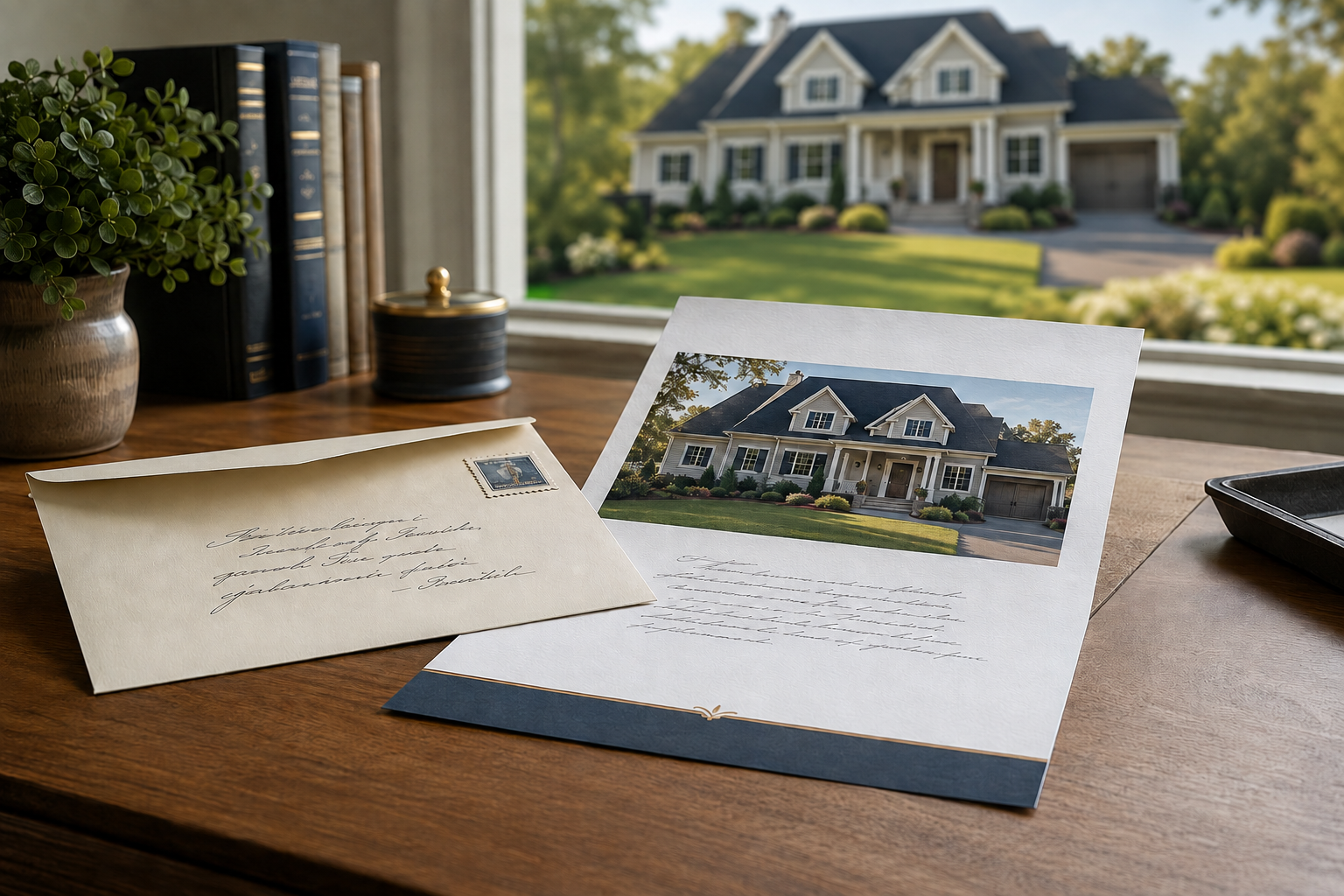
- A personalized image of the recipient's home
- A dedicated response method
A name in the greeting is a useful start, but the rest of the message should also feel connected to the campaign. Vesper's Street View campaigns can add a recognizable image of the recipient's property, creating a visual connection without implying the agency inspected the home or possesses private policy information.
How should the opening paragraph establish relevance?
The opening paragraph should explain why the agency is reaching out without making the recipient work for the answer.
For a renewal campaign, it might acknowledge that the homeowner's renewal period may be approaching and invite a review. For a geographic campaign, it might introduce the agency as serving local homeowners. For a home and auto campaign, it might explain the value of reviewing both policies together.
The strongest opening connects the agency's offer to the recipient without a long story or list of every carrier.
What is a credible offer for an insurance letter?
The offer is the reason to respond. It should describe what the homeowner receives by contacting the agency.
Credible offers may include:
- A homeowners insurance review
- A home and auto policy comparison
- A review of current limits and deductibles
- A conversation about potential coverage gaps
- A quote based on the household's actual needs
- A local insurance consultation
The offer does not need to be a discount. Leading only with price can overlook the value of coverage, service, and long-term fit. Savings statements should be accurate and qualified; the agency should not imply that every household will save or qualify. A good offer creates a reasonable next step instead of guaranteeing an outcome.
How does the letter build credibility?
Useful credibility elements can include:
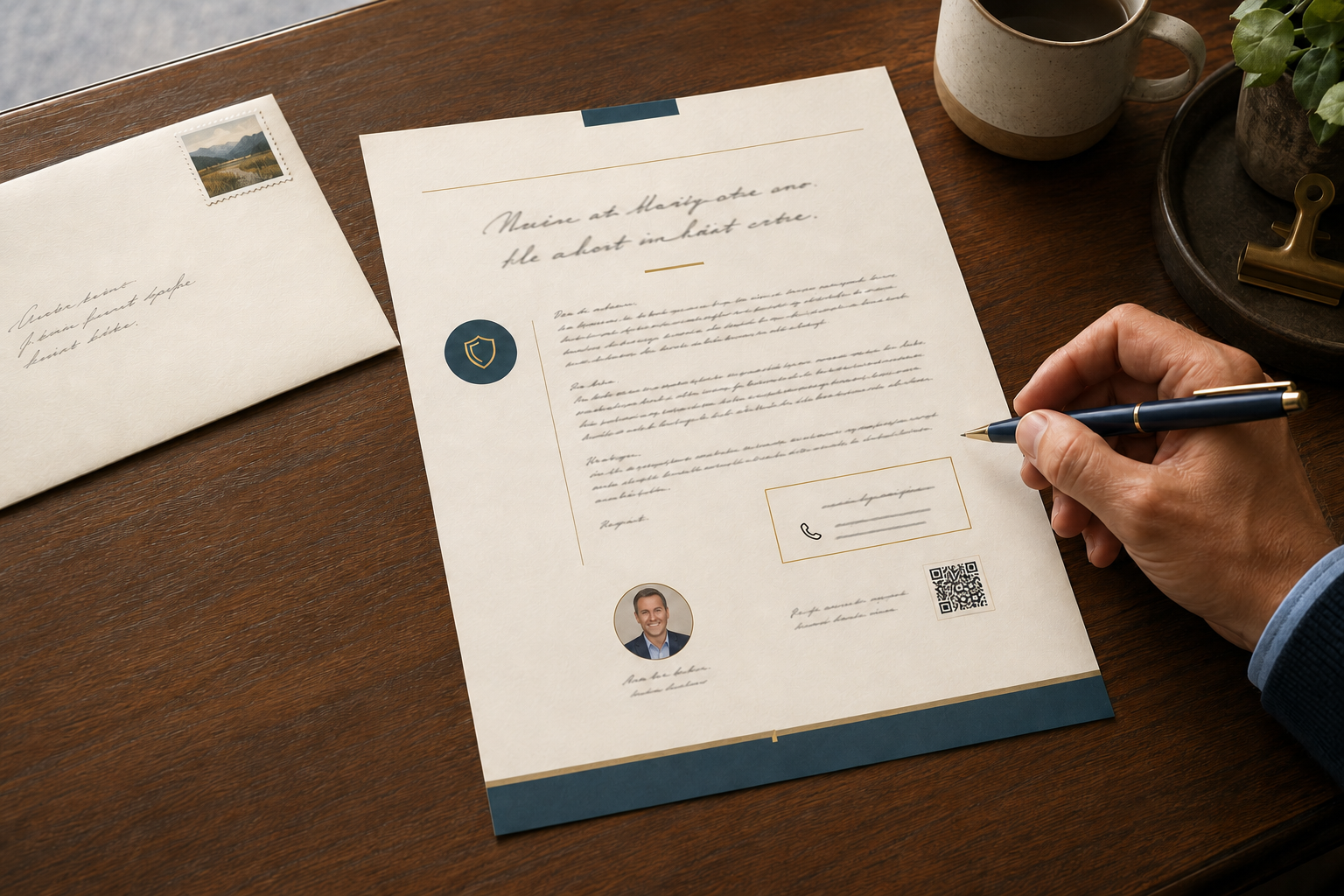
- The producer or agency owner's name
- A professional headshot
- The agency's physical location or service area
- A direct phone number
- The agency website
- Accurate experience or approved carrier relationships
- A brief description of the agency's approach to service
Credibility should remain concise. The recipient may also search the agency online, so its website, Google Business Profile, social pages, reviews, and recent content should support the mail piece.
Our guide to direct mail for insurance agencies that gets calls explains how mail, online credibility, retargeting, and follow-up can work together.
What makes a clear call to action?
A strong call to action tells the recipient exactly what to do and what will happen next.
Compare these examples:
Less effective:
Contact us today for more information.
More specific:
Call [PHONE NUMBER] to request a no-obligation home and auto coverage review.
The second version identifies both the action and the reason for taking it. The letter should emphasize one primary action rather than several phone numbers, websites, QR codes, and competing requests.
Where should the phone number appear?
The phone number should be easy to find near the CTA, in a response box, or in the signature block. A campaign-specific tracking number can identify calls generated by the mailing, provided it forwards reliably and the team answering knows the campaign is active.
Should an insurance letter include a QR code?
A QR code provides an alternative for recipients who prefer to respond online. It should lead to a mobile-friendly quote, coverage-review, campaign, or callback page that continues the letter's offer—not the general homepage.
Add a short instruction such as “Scan to request a coverage review.” A QR code by itself does not explain why someone should use it.
How much copy should the letter contain?
The letter should be long enough to make the offer credible and short enough to remain easy to scan.
Regardless of length, the page should use:
- Short paragraphs
- Clear section breaks
- A readable font size
- Useful emphasis, adequate white space, and a clear visual hierarchy
- A signature and contact block that feel personal
The first page should contain the essential message and response path. Important information should not be buried in fine print or postponed until a second page.
How do the envelope and letter work together?
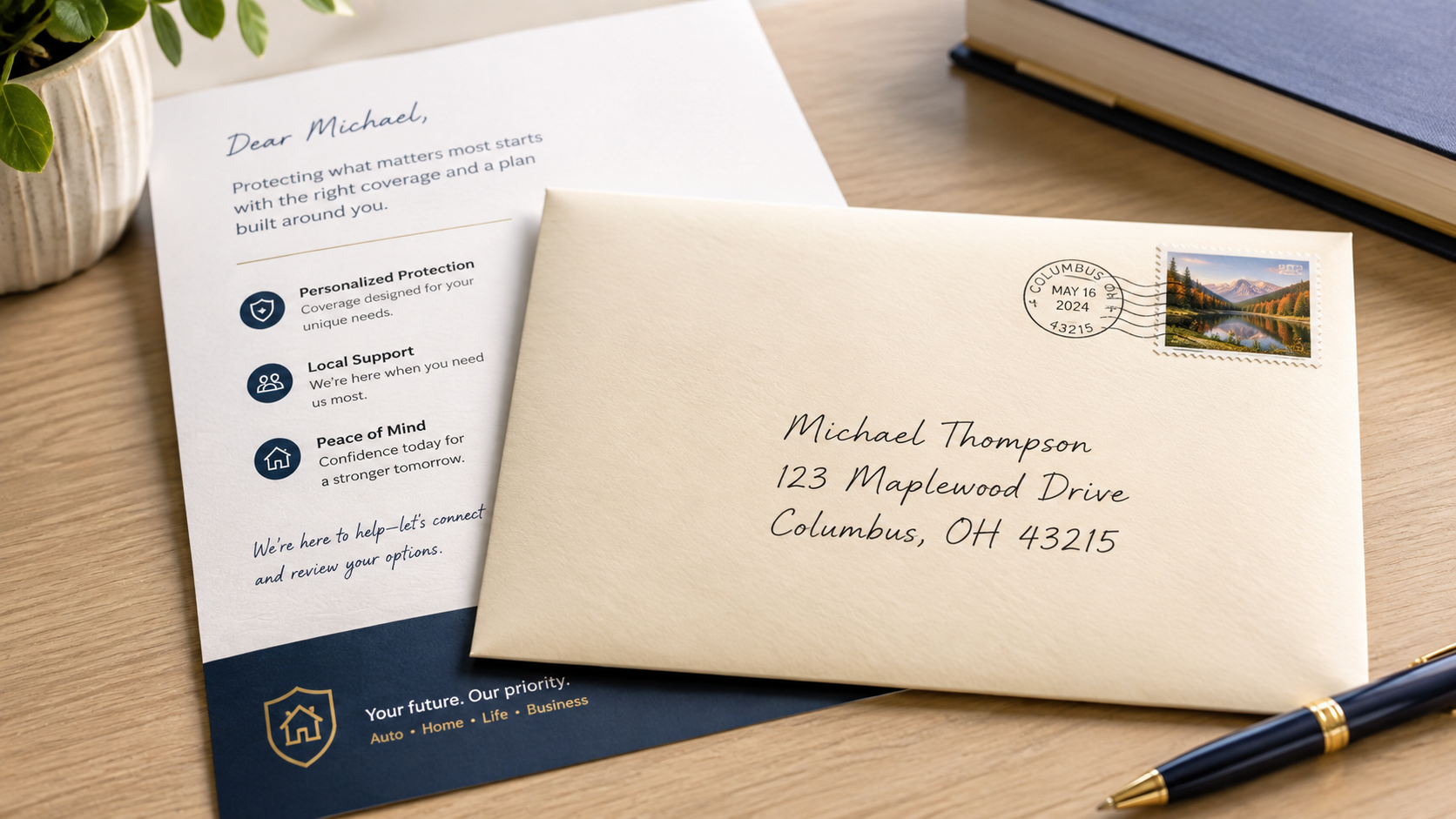
A handwritten-style, non-window envelope with a live stamp can make a targeted package feel more personal. The letter should continue that tone with an individual greeting, straightforward language, recognizable agency information, and a relevant offer. If the outside feels personal but the inside looks like a form letter, the experience becomes inconsistent.
Our article on why we use handwritten envelopes for insurance direct mail explains the envelope's role in earning the open.
What should an insurance agency avoid in a direct mail letter?
A good insurance letter should avoid:
- Misleading urgency
- Language that resembles a government, legal, billing, or cancellation notice
- Unsupported savings promises
- Claims that estimated renewal data is exact
- Implications that the agency reviewed a private policy it has not seen
- Too many products or offers on one page
- Dense copy, a hidden CTA, or QR codes leading to unrelated pages
- Outdated carrier logos, contact information, or disclosures
The final creative should be reviewed against carrier requirements, brand standards, and applicable advertising and insurance rules. Personal does not need to mean aggressive; a clear, respectful letter can earn attention while protecting credibility.
Insurance direct mail letter checklist
Before approving a letter, confirm that it includes:
| Letter element | Approval question |
|---|---|
| Headline | Does it clearly identify the subject or opportunity? |
| Personalization | Does it feel relevant without overstating what the agency knows? |
| Opening | Does it explain why the homeowner is being contacted? |
| Offer | Is there a credible reason to respond? |
| Credibility | Can the recipient quickly identify and research the agency? |
| Call to action | Is one primary next step clearly stated? |
| Phone number | Is it prominent, correct, and ready to receive calls? |
| QR code or URL | Does it lead to a mobile page that matches the offer? |
| Readability | Can the essential message be understood quickly? |
| Accuracy | Are names, addresses, dates, claims, and disclosures correct? |
| Compliance | Has the agency completed its required review? |
When every item has a clear answer, the letter is much closer to production-ready.
Frequently asked questions about insurance direct mail letters
Should an insurance letter mention savings?
It can mention comparing rates or available options, but it should not promise that every recipient will save. Coverage, eligibility, carrier appetite, and household circumstances affect the outcome.
Should the letter be signed by the agency owner or producer?
Usually, the signature should come from the person or team the recipient is likely to contact. A named individual feels more personal when the follow-up process supports it.
Is a postcard better than a letter?
Neither is universally better. A postcard provides immediate visibility; a letter inside a personal envelope offers more room and a more private, premium introduction.
Should the agency list every carrier it represents?
Not necessarily. A long carrier list can distract from the message, and logo use may require approval. Include it only when it strengthens the offer and meets brand requirements.
How often should the letter be updated?
Review it whenever the offer, carrier availability, contact details, response process, requirements, or audience changes. Previous results may also identify headlines, offers, or CTAs worth testing.
Ready to create an insurance letter built for response?
Explore our direct mail services or tell us which households and insurance opportunities you want to reach.
Vesper Marketing can help develop the audience, write the letter, prepare the design, personalize the campaign, and manage printing and mailing from start to finish.